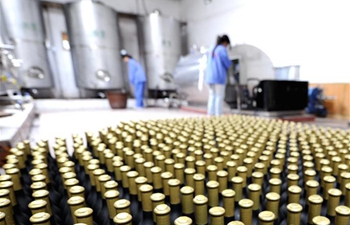
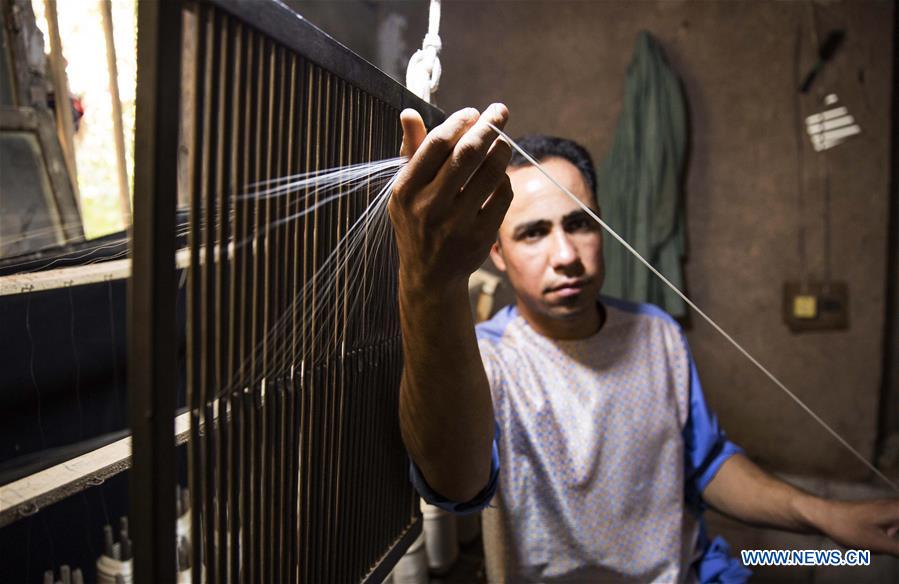
An Afghan man works at a silk production factory in Herat province, Afghanistan, July 13, 2019. Sericulture in Afghanistan's western Herat province is a branch of agriculture that used to be flourishing but has faced serious stagnation due to persistent conflicts in the country in recent years. However, Afghanistan is now making an effort to renew the sericulture industry and produce silk in the province, to once again reinvigorate silk trade between the country's western province and neighboring China. (Xinhua/Elaha Sahel)
KABUL, July 12 (Xinhua) -- Sericulture in Afghanistan's western Herat province is a branch of agriculture that used to be flourishing but has faced serious stagnation due to persistent conflicts in the country in recent years.
However, Afghanistan is now making an effort to renew the sericulture industry and produce silk in the province, to once again reinvigorate silk trade between the country's western province and neighboring China.
This year, farmers have produced tens of tons of cocoons in the province, which is multiple times more than in the last three years.
In Zindajan, a district in western Herat, which is predominantly an agricultural area, sericulture has been a part of local people's lives since the industry was popularized in the province centuries ago.
Afghanistan's Ministry of Agriculture imports silkworms lodged in special, safe boxes from China and distributes them among the farmers and cocoon producers in the district annually.
"Hundreds of families in the Zindajan district are now involved in the breeding of silkworms, as the industry has been thriving of late, more so than over the past decade," Abdul Karim Ahmadi, a veteran of the industry, told Xinhua recently.
Due to the high volume of silk expected to be produced this year, the government will have to help the producers export their products overseas.
"The Chinese market is very suitable for the selling of silks produced in Herat province, and silk producers are expected to send their products to the Chinese market this year," Ahmadi said.
The production of silkworm cocoons is still a traditional industry in the province, with women mostly engaged, alongside men, in keeping the silkworms at home, while they are fed with mulberry leaves.
Everyday for four hours, silkworm breeders would go to the garden and collect mulberry tree leaves and take them home to feed their silkworms.
The process takes at least one month until they have young, active silkworms for producing cocoons.
Silk producers said delicate fabrics, beautiful clothes, and high-quality colorful headscarves would be manufactured by the Herat craftsmen from raw silk, and be exported to foreign countries, particularly to China.
The price of one kg of raw silk at a local market in Herat, according to locals, is 240 U.S. dollars, and if exported to China the price could significantly increase.
The government's cocoon and sericulture program envisages that cocoon producers will receive technical training along with being given standard silkworm packages, said Nasir Ahmad, Zindajan district's agriculture manager.
The Afghan government is strongly supporting the industry to grow and find its way to overseas markets, especially to the Chinese market, he added.