Xizang heritage inheritor devoted to promoting Tibetan Duixie


Nyima Tsamjo gives a "Duixie" class in Lhasa, southwest China's Xizang Autonomous Region, March 13, 2026. Nyima Tsamjo is a municipal-level intangible cultural heritage inheritor specializing in "Duixie", a time-honored traditional Tibetan singing and dancing art.
She has studied and practiced this precious integrated performing art form since childhood, and her passion for "Duixie" has never faded.
As a form marking a high point in the development of Tibetan folk performing arts, "Duixie" has been popular mainly in Tibetan urban areas including Lhasa and Xigaze for hundreds of years.
Since 2007, Nyima Tsamjo has devoted herself fully to the non-profit inheritance of "Duixie". She has traveled to many parts of Xizang to hold free public classes, sticking to the frontline of teaching all year round. Students of all age groups have joined her public classes.
In 2013, Lhasa "Duixie", the specific heritage she inherits, was added to the fourth batch of the autonomous-region-level intangible cultural heritage protection list.
Now in her sixties, Nyima Tsamjo still takes public welfare "Duixie" teaching as her responsibility, boosting the dynamic inheritance of this ancient singing and dancing intangible cultural heritage. (Xinhua/Tenzing Nima Qadhup)
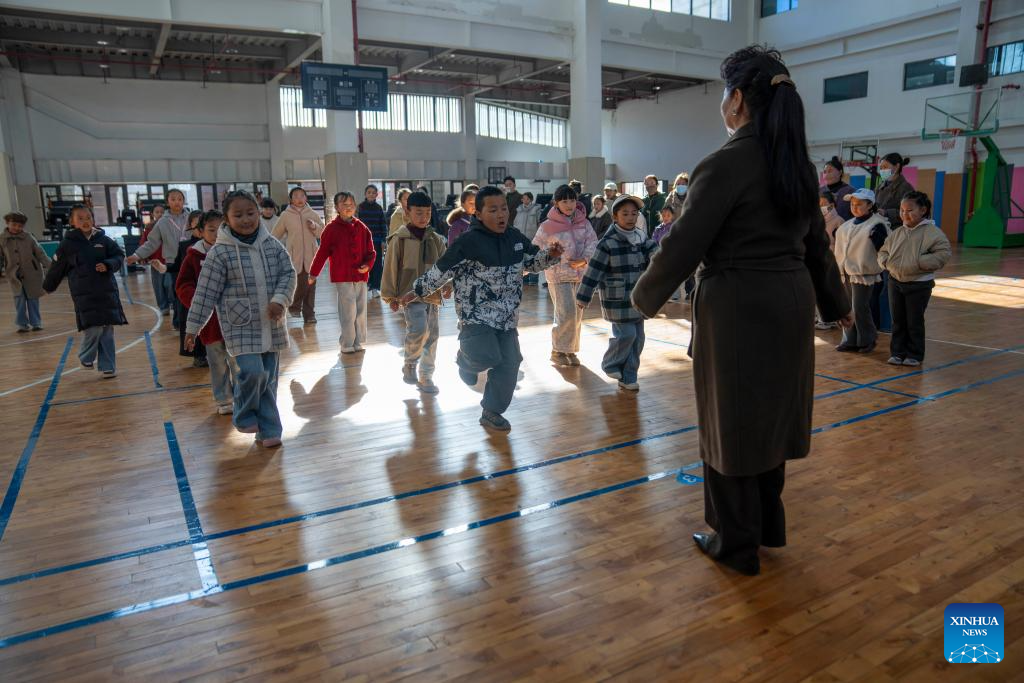
Nyima Tsamjo gives a "Duixie" class in Lhasa, southwest China's Xizang Autonomous Region, March 7, 2026. Nyima Tsamjo is a municipal-level intangible cultural heritage inheritor specializing in "Duixie", a time-honored traditional Tibetan singing and dancing art.
She has studied and practiced this precious integrated performing art form since childhood, and her passion for "Duixie" has never faded.
As a form marking a high point in the development of Tibetan folk performing arts, "Duixie" has been popular mainly in Tibetan urban areas including Lhasa and Xigaze for hundreds of years.
Since 2007, Nyima Tsamjo has devoted herself fully to the non-profit inheritance of "Duixie". She has traveled to many parts of Xizang to hold free public classes, sticking to the frontline of teaching all year round. Students of all age groups have joined her public classes.
In 2013, Lhasa "Duixie", the specific heritage she inherits, was added to the fourth batch of the autonomous-region-level intangible cultural heritage protection list.
Now in her sixties, Nyima Tsamjo still takes public welfare "Duixie" teaching as her responsibility, boosting the dynamic inheritance of this ancient singing and dancing intangible cultural heritage. (Xinhua/Tenzing Nima Qadhup)

Nyima Tsamjo gives a "Duixie" class in Lhasa, southwest China's Xizang Autonomous Region, March 13, 2026. Nyima Tsamjo is a municipal-level intangible cultural heritage inheritor specializing in "Duixie", a time-honored traditional Tibetan singing and dancing art.
She has studied and practiced this precious integrated performing art form since childhood, and her passion for "Duixie" has never faded.
As a form marking a high point in the development of Tibetan folk performing arts, "Duixie" has been popular mainly in Tibetan urban areas including Lhasa and Xigaze for hundreds of years.
Since 2007, Nyima Tsamjo has devoted herself fully to the non-profit inheritance of "Duixie". She has traveled to many parts of Xizang to hold free public classes, sticking to the frontline of teaching all year round. Students of all age groups have joined her public classes.
In 2013, Lhasa "Duixie", the specific heritage she inherits, was added to the fourth batch of the autonomous-region-level intangible cultural heritage protection list.
Now in her sixties, Nyima Tsamjo still takes public welfare "Duixie" teaching as her responsibility, boosting the dynamic inheritance of this ancient singing and dancing intangible cultural heritage. (Xinhua/Tenzing Nima Qadhup)
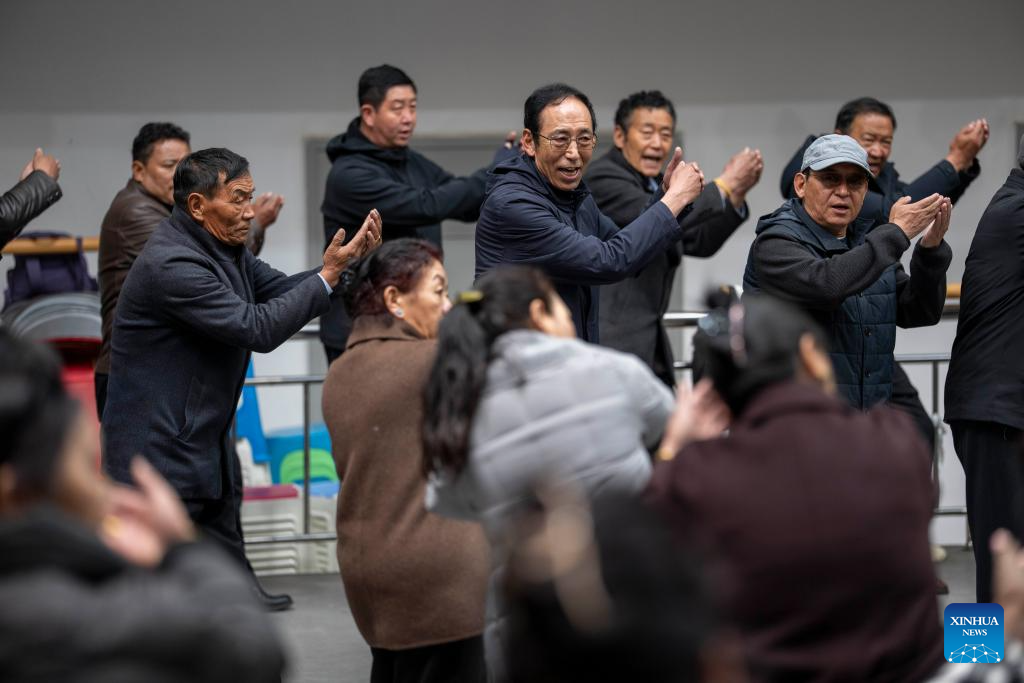
Nyima Tsamjo gives a "Duixie" class in Lhasa, southwest China's Xizang Autonomous Region, March 13, 2026. Nyima Tsamjo is a municipal-level intangible cultural heritage inheritor specializing in "Duixie", a time-honored traditional Tibetan singing and dancing art.
She has studied and practiced this precious integrated performing art form since childhood, and her passion for "Duixie" has never faded.
As a form marking a high point in the development of Tibetan folk performing arts, "Duixie" has been popular mainly in Tibetan urban areas including Lhasa and Xigaze for hundreds of years.
Since 2007, Nyima Tsamjo has devoted herself fully to the non-profit inheritance of "Duixie". She has traveled to many parts of Xizang to hold free public classes, sticking to the frontline of teaching all year round. Students of all age groups have joined her public classes.
In 2013, Lhasa "Duixie", the specific heritage she inherits, was added to the fourth batch of the autonomous-region-level intangible cultural heritage protection list.
Now in her sixties, Nyima Tsamjo still takes public welfare "Duixie" teaching as her responsibility, boosting the dynamic inheritance of this ancient singing and dancing intangible cultural heritage. (Xinhua/Tenzing Nima Qadhup)

Students of Nyima Tsamjo participate in a children's art gala in Lhasa, southwest China's Xizang Autonomous Region, May 30, 2026. Nyima Tsamjo is a municipal-level intangible cultural heritage inheritor specializing in "Duixie", a time-honored traditional Tibetan singing and dancing art.
She has studied and practiced this precious integrated performing art form since childhood, and her passion for "Duixie" has never faded.
As a form marking a high point in the development of Tibetan folk performing arts, "Duixie" has been popular mainly in Tibetan urban areas including Lhasa and Xigaze for hundreds of years.
Since 2007, Nyima Tsamjo has devoted herself fully to the non-profit inheritance of "Duixie". She has traveled to many parts of Xizang to hold free public classes, sticking to the frontline of teaching all year round. Students of all age groups have joined her public classes.
In 2013, Lhasa "Duixie", the specific heritage she inherits, was added to the fourth batch of the autonomous-region-level intangible cultural heritage protection list.
Now in her sixties, Nyima Tsamjo still takes public welfare "Duixie" teaching as her responsibility, boosting the dynamic inheritance of this ancient singing and dancing intangible cultural heritage. (Xinhua/Tenzing Nima Qadhup)

Nyima Tsamjo gives a "Duixie" class in Lhasa, southwest China's Xizang Autonomous Region, March 7, 2026. Nyima Tsamjo is a municipal-level intangible cultural heritage inheritor specializing in "Duixie", a time-honored traditional Tibetan singing and dancing art.
She has studied and practiced this precious integrated performing art form since childhood, and her passion for "Duixie" has never faded.
As a form marking a high point in the development of Tibetan folk performing arts, "Duixie" has been popular mainly in Tibetan urban areas including Lhasa and Xigaze for hundreds of years.
Since 2007, Nyima Tsamjo has devoted herself fully to the non-profit inheritance of "Duixie". She has traveled to many parts of Xizang to hold free public classes, sticking to the frontline of teaching all year round. Students of all age groups have joined her public classes.
In 2013, Lhasa "Duixie", the specific heritage she inherits, was added to the fourth batch of the autonomous-region-level intangible cultural heritage protection list.
Now in her sixties, Nyima Tsamjo still takes public welfare "Duixie" teaching as her responsibility, boosting the dynamic inheritance of this ancient singing and dancing intangible cultural heritage. (Xinhua/Tenzing Nima Qadhup)

Nyima Tsamjo dresses her students participating in a children's art gala in Lhasa, southwest China's Xizang Autonomous Region, May 30, 2026. Nyima Tsamjo is a municipal-level intangible cultural heritage inheritor specializing in "Duixie", a time-honored traditional Tibetan singing and dancing art.
She has studied and practiced this precious integrated performing art form since childhood, and her passion for "Duixie" has never faded.
As a form marking a high point in the development of Tibetan folk performing arts, "Duixie" has been popular mainly in Tibetan urban areas including Lhasa and Xigaze for hundreds of years.
Since 2007, Nyima Tsamjo has devoted herself fully to the non-profit inheritance of "Duixie". She has traveled to many parts of Xizang to hold free public classes, sticking to the frontline of teaching all year round. Students of all age groups have joined her public classes.
In 2013, Lhasa "Duixie", the specific heritage she inherits, was added to the fourth batch of the autonomous-region-level intangible cultural heritage protection list.
Now in her sixties, Nyima Tsamjo still takes public welfare "Duixie" teaching as her responsibility, boosting the dynamic inheritance of this ancient singing and dancing intangible cultural heritage. (Xinhua/Tenzing Nima Qadhup)

Nyima Tsamjo dresses her students participating in a children's art gala in Lhasa, southwest China's Xizang Autonomous Region, May 30, 2026. Nyima Tsamjo is a municipal-level intangible cultural heritage inheritor specializing in "Duixie", a time-honored traditional Tibetan singing and dancing art.
She has studied and practiced this precious integrated performing art form since childhood, and her passion for "Duixie" has never faded.
As a form marking a high point in the development of Tibetan folk performing arts, "Duixie" has been popular mainly in Tibetan urban areas including Lhasa and Xigaze for hundreds of years.
Since 2007, Nyima Tsamjo has devoted herself fully to the non-profit inheritance of "Duixie". She has traveled to many parts of Xizang to hold free public classes, sticking to the frontline of teaching all year round. Students of all age groups have joined her public classes.
In 2013, Lhasa "Duixie", the specific heritage she inherits, was added to the fourth batch of the autonomous-region-level intangible cultural heritage protection list.
Now in her sixties, Nyima Tsamjo still takes public welfare "Duixie" teaching as her responsibility, boosting the dynamic inheritance of this ancient singing and dancing intangible cultural heritage. (Xinhua/Tenzing Nima Qadhup)
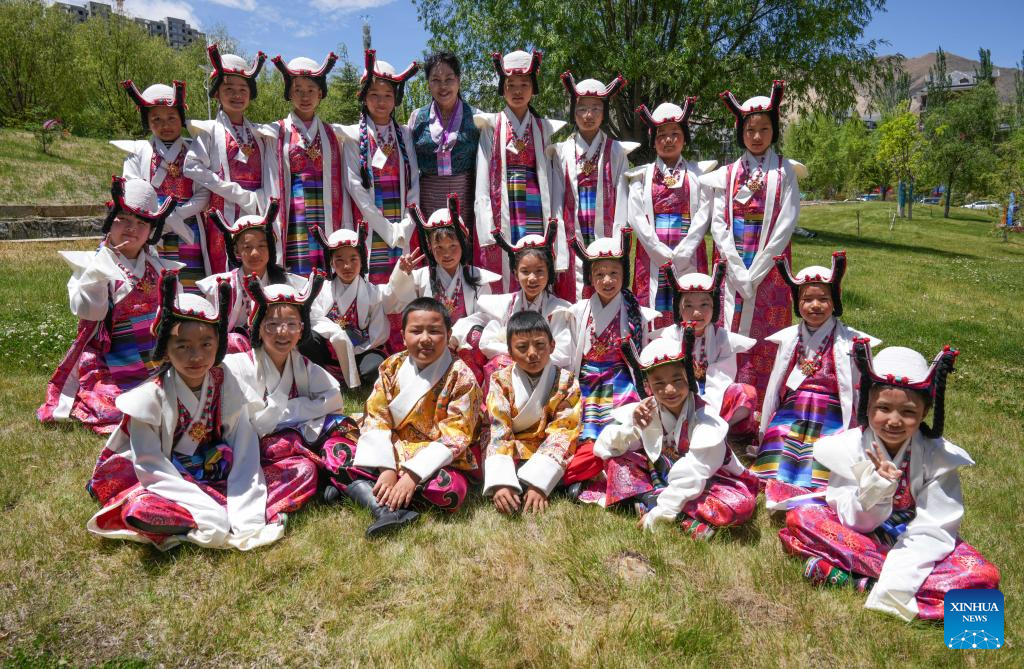
Nyima Tsamjo poses for a group photo with her students participating in a children's art gala in Lhasa, southwest China's Xizang Autonomous Region, May 30, 2026. Nyima Tsamjo is a municipal-level intangible cultural heritage inheritor specializing in "Duixie", a time-honored traditional Tibetan singing and dancing art.
She has studied and practiced this precious integrated performing art form since childhood, and her passion for "Duixie" has never faded.
As a form marking a high point in the development of Tibetan folk performing arts, "Duixie" has been popular mainly in Tibetan urban areas including Lhasa and Xigaze for hundreds of years.
Since 2007, Nyima Tsamjo has devoted herself fully to the non-profit inheritance of "Duixie". She has traveled to many parts of Xizang to hold free public classes, sticking to the frontline of teaching all year round. Students of all age groups have joined her public classes.
In 2013, Lhasa "Duixie", the specific heritage she inherits, was added to the fourth batch of the autonomous-region-level intangible cultural heritage protection list.
Now in her sixties, Nyima Tsamjo still takes public welfare "Duixie" teaching as her responsibility, boosting the dynamic inheritance of this ancient singing and dancing intangible cultural heritage. (Xinhua/Tenzing Nima Qadhup)


